Showing posts with label Photography. Show all posts

Friday, January 11, 2013

BEST OF 2012

Each January Jim Goldstein, a colleague, posts on his blog a list of photographers who submit their Top Ten (or 12) images for the previous year. You can see the list here. I missed this year so I'm going to put my 2012 images here and more on my updated image database here.
This is an endangered wild Great Green Macaw. Only 30 nesting pairs left in Costa Rica. This has to be my favorite image because I'd been searching for several years to find them. I also photographed the nest with both parents.

This is another favorite from our 2012 adventure guiding a tour to Costa Rica. It has a simplistic style often seen in Asian art.


I was in the water with this bear as he was fishing for Salmon on Admiralty Island the day after our summer Alaska Adventure Workshop.

This bear was lounging in the grasses. The angle of his head makes him very personable...or hungry.

My tribute to Jackson Pollack. Standing on a foot bridge enjoying the view, camera in hand, when this beaver swam right under me.

I had just told the captain that I wanted the sun behind us on a workshop I was leading in Alaska. Instead I got this wonderful back light. Glad he didn't listen to me.

I have a similar photo of a cow moose coming toward me from a couple of years ago, very close. This bull moose was probably wondering what I was doing crouched down in the sage. I was getting a low angle for one of my favorite images of 2012.

Custer State Park in South Dakota is probably the best state park in the country for wildlife. I seldom get the chance to photograph white-tailed deer and I was pretty excited to get this one during the rutting season.

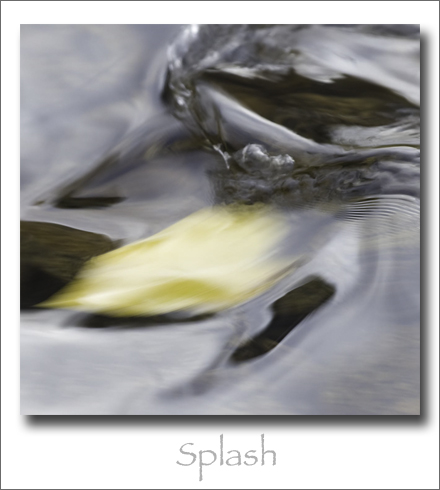
I love slow mo. 

And I love the square format. I should do more.

The day was ending and there was barely enough light to shoot. I was able to get this last one as the tide retreated at the San Francisco Bay Wetlands.

Right out of a cowboy movie and into the sunset.

This shot of a gull gulping down a salon egg surprised me. 

I was shooting flies when this bison walked into the frame.

Early morning in Yellowstone. Does it get any better?

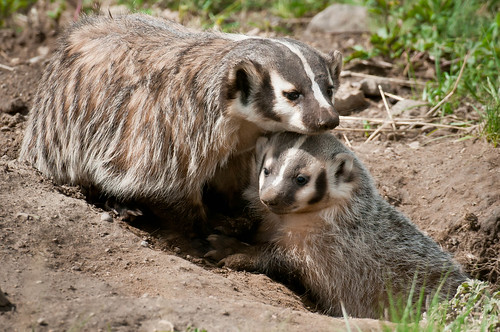
My buddy the Badger. We had a nice visit.

Night shot at Old Faithful in Yellowstone. The big dipper hangs while the show goes on.

Great-horned owl puts on a nice display for me.

A bald eagle has found a most picturesque perch. We have one thing in common, we're both called baldy.

These are some of my favorites for 2012. I hope you enjoy them. I had a ball making them.


Monday, December 17, 2012

GUESS AND WIN, WINNER!


We have a winner!
I received a lot of guesses as to the subject to the ‘Guess what this is’ ONE CLICK!

Claudia came closest with her guess of the North Star. Congratulations Claudia! I’m not sure it was the north star, but it was a star. It was not a planned shot, here’s how it happened:

I was out shooting the night sky and the milky way. I was after static images like the one at right where the stars are not moving. The other type of night sky shooting is to use a long exposure and make star trails. You may have seen images of star trails that arc across the sky. They are much harder to make using digital cameras as the shutter needs to be open for hours. Batteries won’t last long enough and the digital sensor will produce artifacts and red or green hues from being exposed for such a long time. With film you could use a manual camera and keep the shutter open all night. As the earth spins the stars record a streak of light in an arc across the film.

So I thought why not try to make star trails by rotating the camera? Much faster than waiting for the earth to move. I have a telephoto lens that has a collar which mounts to the tripod. I can loosen the collar and the camera and lens will spin 360 degrees.

I pointed my longest lens (400mm) to a bright star in the sky, centering it in the viewfinder the best I could. My hopes were that when I rotated the lens while keeping the shutter open all the other stars would ‘streak’ across the sensor producing star trails. What fun! I spun the lens several times while the shutter was open for 30 seconds. The center star is what you see in the ONE CLICK!. It wasn’t quite centered. If it was it would have been a white dot.

Slight vibration of the camera occurred as I spun the lens causing the star trail to shake a little making an almost ribbon effect. The different colors are produced because of scintillation ("Twinkling") as the light passes through the atmosphere of the Earth. As the air moves in and out, the starlight is refracted, often different colors in different directions. Because of this "chromatic aberration," stars can appear to change colors when they are twinkling strongly. 

The spinning, the the vibration, and the twinkling produced this unexpected surprise that I just had to share.

Tuesday, June 19, 2012

One Year Ago

I like to look back one year to see where I was and what image I made. This image was made June 21 2011, Yosemite Falls. Darn, wish I was there.

Ah the digital age. I can easily retrieve any image by date in Lightroom. I'm using version 4 but any version of Lightroom works as well as many other applications including Aperture. It is also a great way for me to remember what I did in the past. Wasn't that the real reason for photography? To record memories? Now we use it to refresh our memories. Which reminds me, oh yea, I did go to Yosemite in 2011.


Sunday, June 17, 2012

Yellowstone Teton Spring Success!


We're back from a fantastic series of spring workshops in Yellowstone and Grand Teton National Parks. A few of what we saw and photographed:
Young Great Horned Owls in nest (see above)
Bluebird Nesting
Flicker feeding chicks in nest
Bison with new calfs
Elk with calf
Grizzly bears with cubs
Black Bears with cubs
Wolf close enough for photos
Moose with calf
Beavers
Marmot
and not 1, but 2 Badgers on the same day!


We also had plenty of opportunities for great landscapes of the Grand Tetons, Yellowstone River, Morning fog, and geysers. More photos click here


Thanks to all who participated.

Now we're getting ready for an amazing Alaska Adventure!


Sunday, May 13, 2012

Chain of Fools

I've been shooting anything I can find with the new D800E and every time I download my images I'm blown away. I can take an uninteresting composition, grab the crop tool and find some little jewel within the image and still have enough pixels to make a great print!

I know, that's cheating. I'm supposed to compose in the viewfinder, but as I said, I'm just out shooting anything and everything to learn the camera and all the features. And there are features galore! Like the new Virtual Horizon that shows roll and pitch in the VIEWFINDER! I set the fn button to activate it. It's so handy for keeping the horizon straight without going through the menu and having it displayed on the LCD. I'm likin' this feature.

Okay, sing along...Chain Chain Chain... Yesterday I was out playing with the D800E and found an interesting subject in the tack shed, an old tow chain that probably weighs 30 lbs.  I strung the chain between to trees and got out the hose. I had so much fun I'm going to do more today!


Still have a couple of seats for Grand Teton workshop in June. We'll be looking for Bear, Moose, Bison, Pronghorn and a whole lot more including cubs, calfs, and kids.

Thursday, April 26, 2012

Nikon D800E Hawk in DX

Just returned from a quick shoot in Carson Valley. Found a Red-tailed hawk. Switched the Nikon D800E  to DX mode and attached a 1.4 extender to the Nikon 200-400mm f4. I try not to use an extender on zooms as the results are not consistent as far as sharpness and detail are concerned. But this hawk was not that close so I needed all the reach I could muster.

Here is the full frame from the DX mode, 15mp 24x16mm, and cropped image follows. This is incredibly sharp!


Wednesday, April 25, 2012

More Results E v nonE

We left off with me being pretty satisfied that the D800E is a little sharper than the D800. Little is subjective. I think the larger the print, and I mean really really large, the benefits of the E become more apparent and useful. If your a pro shooter and your images are on billboards the E is the only way to go! Or if you like to crop the * out of your images...

Let's move on to my next big question: How often will moire' crop up in my typical shoot? As you know I'm a wildlife photographer and for me wildlife includes everything in nature, but mostly things that go bump in the night (and day). I love to shoot landscapes, abstracts, and macro, too, and I love to make huge prints. So will the E or the nonE be the best choice for what I do?

These tests and images were done with the E unless otherwise stated.
Initially I was having a hard time finding the usual suspects, eh, subjects. Birds are a little scarce in the high Sierras right now and the ones that are flittering around are not very cooperative. As I was doing my sharpness test a robin appeared not too far away but in the shade. Okay, I shoot in the shade, let's have a go at it. Here's the original shot:

A little dark but I took a look at it in LR4 anyway. I zoomed in and thought I saw moire' in the gray feathers! So I tweaked a little and I did, I did see moire'. To make it obvious I increased the vibrance so you can see it too:
Exposure  +.45 and opened shadows a touch.
On the following image I increased Vibrance a lot so you can more easily see the moire'

Okay, now I'm a little nervous. I didn't expect this. I have been reading a lot on the web how moire' usually only occurs if there are grid type lines like you'd see in machine woven cloth or window screens. Feathers have been a controversy. Will moire' show up in feathers? How often? How intense?

Okay Jim, slow down, this is only one bird, and it's a robin. Nothing against robins mind you, they're just not in my viewfinder that often. I like large birds like geese, ducks, swans, egrets, herons, and birds of prey like Eagles! of course, Eagles! What's going to happen with Eagles? I don't know. But I do know what happens with this goose:


Whew! Not much, this goose looks good. No sign of moire'. I made a few images but not enough and with not enough variety of birds to be conclusive, I will keep shooting. I'm also thinking that the shade may have something to do with it. Is moire' more evident in shadow areas? Will bright sun reduce the chance of moire' in bird feathers? Will I have to shoot all my birds in bright sun? or will I opt for the D800? Stay tuned...


Monday, April 23, 2012

D800 or D800E? Here's my results.


Are you confused reading everything on the internet about the D800 and D800E Nikon cameras? I was, so I set out to find the truth...for me. 
I’m a wildlife and landscape photographer and there are several challenges that one of these new Nikon bodies may help me with in future image making. Which, if either, is right for me? D800 or D800E? Which one will serve my needs best? I have a few questions that I want answered before I decide which one I should use.

If you are reading this you already know the difference of the 2 new bodies recently released by Nikon. Let me re-cap. Just like the butter spread, No Différence...other than the low pass filter has been removed from the E. If you don’t know about low pass filters then you probably need to read up on it here: http://www.nikonusa.com/Learn-And-Explore/Nikon-Camera-Technology/gy43mjgu/1/Moire-and-False-Color.html 
These are the questions I wanted to answer:
How much more detail is available in the E compared to the nonE in large prints?
When and where in nature does moire’ appear, if at all?
How can moire’ be removed in an image in post processing and which software will do the best job?
Those are the basic questions of which I found no easy answer. Each answer led to more questions. I did get the answers I was looking for...eventually. 
Disclaimer: I am not a tech geek and with no disrespect to the techies, I don’t want to be. I don’t know all there is to know about diffraction, refraction, detraction, attraction, et al, but I do know image making. I do know what I like and how to get it without knowing all the techie stuff, although some knowledge of it is helpful, it's what I see in the finished image that makes my day.
Here are the initial criteria I used to make the tests:
I kept settings on both cameras identical.
All tests were shot in raw, white balance set to 5500k, Aperture Priority and Manual exposure settings were used.
I used two lenses during the tests. The 70-200mm f2.8 and the 200-400mm f4. The choice was based on the ability to mount either lens on a tripod and change cameras without moving the lens, the focus, or the zoom. It was also based on the fact that those are my most used lenses. Remember, I was testing for me. VR (vibration reduction) was turned off.
Image Process:
All images were shot in RAW. 
I used Lightroom 4 to import images. I set all LR adjustments to zero including sharpening and noise reduction. For some tests I set LR sharpening at default, +25.
Camera Calibration was set to Adobe Standard and Process is 2012. If you don’t know about all this it doesn’t matter. What matters is that all compared side-by-side images were processed the same. That’s the important point. I was not trying to make one image look like the other, I was trying to see the difference when settings were equal.
Now the results for image quality:
My assistant for the first series of test was Griffin Gregory, he did a terrific job in the field as well as with side-by-side image comparisons on the monitor. After an exhaustive first morning we found the D800E to be slightly sharper with slightly more detail in most of the images. There was one comparison where the D800 appeared to be better. That could be a result of operator error.
The afternoon shoot produced some fantastic results. My wife Kathy and I headed out to Emerald Bay, Lake Tahoe for some side by side landscape images and here is where the E proved itself. 
Here are a couple of side-by-side images from Emerald Bay:

The next day I printed the above images for comparison. This is the most important test for me. Images viewed on the web or even on the monitor won’t show all the nuances that may be apparent in the print. Here’s how I made the prints:
I did not resize. I used the image size that came right out of the camera, 7360x4912. What ever dpi you choose for printing without resizing will determine the print size. Divide ppi by selected dpi equals image size. 7360ppi/240dpi=30inches 4912ppi/240dpi=20inches. At full resolution without resizing at 240dpi you get a 20x30 print (rounded) from the 36mp sensor of the D800/E. At 120dpi you get a huge 40x60 inch print! 
Now before I get a lot of flack on 240dpi and 120dpi understand this; you can use what ever dpi you are comfortable with. I use 240dpi almost all the time when printing with my wide format Epson. Sometimes I use 120dpi if my image is really large. I can’t see the difference when the print is viewed at the normal distance for the size. (let’s not go there either) Please keep in mind, everything I am saying is what works for me. You may have different criteria and different needs.
This side-by-side of Fannette Island is a crop from the images above. I took an 8x10 section of the  tea house out of a 40x60 inch image size. I printed both and found the E to be noticeably sharper with more detail. You may not be able to see the difference as easily on your monitor.

Well, that’s it for now. My conclusion so far is that the D800E is apparently sharper with more detail in large prints than the D800. But only in large prints. What will my next blog reveal and which Nikon did I choose? Stay tuned...

Thursday, April 19, 2012

LET THE GAMES BEGIN...


Here is Steve just moments ago at Leo's Camera receiving MY new D800E. I know he'll play with it before he ships it to me, but that's okay. I'll have the D800 and D800E in my hot little hands tomorrow. Right Steve?


I've laid out the criteria for my testing. The set-up: I’ve decided to use my 70-200mm 2.8 Nikon VR lens for most of the tests. I may use the 200-400mm f4 Nikon VR as well. I chose these lenses as they mount directly to the tripod. I can change cameras without changing lens position or focus. 
The settings on both cameras will be factory defaults. I don’t usually shoot this way but I am only interested in the difference in detail at this point and since the cameras are identical except for the low pass filter default setting should be identical too. (I will verify before starting test)
Other Settings: same on both bodies:
Manual focus mode. (Lens is set to manual focus only, VR off) 
All exposure readings will be made with the D800. The D800E will be set to match.
ISO: 100.
Quality: Raw
White Balance: 5500 
Shutter: Single Servo
Mirror Lock-up
Cable release 

I have several locations staked out including cows in Carson Valley as a substitute for wildlife fur. Birds as I can find for potential feather moire'.

I will also do a quick test of video between the two for moire' problems.

I'll be making prints of the images as well as posting results. Hopefully by Monday.
See you then.
Jim

Friday, April 13, 2012

D800 vs D800E Print Test


The questions I, and many other photographers have are, is the D800E that much sharper than the D800? Will moire' show up in wildlife and nature? Will it be hard to remove when it does show up? The only way to get the results is a to shoot side by side in real world conditions. Therefore I've decide to get one of each. I will be getting the D800 in a couple of days and the D800E in a week or so. (so I've been told)

Comparing images on a computer screen doesn't really do much. Computer screens are 72dpi so no matter what size sensor you have the results will not be completely apparent. We need to see prints, large prints, to really see the difference. My thought process is to put a 70-200mm lens on a tripod and shoot both cameras on it leaving the lens pointing at the same subject. I will make several shots of different real world nature subjects. I will print images from each camera at full resolution without adjustments and compare the prints side by side.

I'm not going to test the cameras for auto focus, follow focus, or any of the extra features they possess. All I want to know is image quality comparison and moire' challenges.

I will intentionally shoot some images that should produce moire'. I will be using Lightroom 4, Photoshop CS6 beta, and NX2's moire' removal tools and test which will be easiest to use and which does the best job.


I will report on the results on this blog and other sites when I'm done, hopefully in a couple of weeks.

Here's the challenge. I can only keep one body according to my financial adviser (wife) so I will need to sell the one I don't keep. It will be used only for the test and I'm looking to sell it for my purchase price.

If you are interested, let me know. I already have 3 photographers on a wait list for the D800.

I am not paid by Nikon or anyone else to do these tests. They will be made to satisfy curiosities. These will not be scientific tests as I am not a scientific photographer. I'm looking for real world shooting results. I'm a wildlife/landscape photographer and am looking for the best tools to make great images. If you want to read the results subscribe to my blog or drop me an email...Jim


Thursday, July 29, 2010

Great News!


Waiting for Wisdom
This Saturday, July 31 is the Wildflower Festival at Kirkwood. You've heard me rave about it before. This is the only outdoor show we do and we have a blast!


• Music
• BBQ
• Wine and Beer tasting
• Guided Hikes
• Ride the chair lift
and of course, lots of art! Including my newest images of an owl nest that you won't want to miss. And more large cloth panels to delight your visual senses.
NOON to 5 PM Kirkwood California
See you there!


Badgers


More good news!
I'm heading up a Wildlife Photography Workshop in the Grand Tetons this fall. (see side bar)
I'll be the workshop leader for Nikonians Academy and look forward to many new adventures. Hope you'll join in.

Our MarchTour to Costa Rica is reserved for photographers though Nikonians and we are in the planning stages for Africa next May.

The two tours to Costa Rica in February still have seats available so let us know if you are interested.

Sunday, March 21, 2010

Costa Rica 2010


My initial in flight. This is a Frigate bird that just caught an eel. It couldn't quite get it down and eventually dropped it into the ocean where it was sought after by a brown pelican. Not sure if the pelican retrieved the eel.

This one's a little gross. We came across this iguana eating a dead parrot. It would grab the bird and shake it violently until a piece tore off. After the iguana had its share a black vulture took its turn.


The Jabiru Stork is the tallest bird in the Americas with males standing up to 5 feet! They are endangered in Costa Rica and consequently hard to find. This one was at Palo Verde National Park.

Costa Rica 2010 has been a real trip. 56 adventurous days. I am going to try and recap from my log some of the highlights with photos in the coming weeks. Writing this from the first good internet connection since we arrived. Now, only a few days left until we return to the office.

Stay tuned for some exciting stories and incredible images and tips if you plan to visit.

Saturday, January 9, 2010

BEST OF 2009

Here we go again, the best of another year. Thanks to colleague Jim M. Goldstien HERE who has inspired many photographers to look over their past year's images and pick their favorite.
Here's mine.

Here is one of my all time favorite of the year. The look of anticipation on the young osprey as the parent brings a fresh trout back to the nest. This happened just a few moments after I set up my camera.

This guy had just rose after sitting for quite some time. He did a lip curl to check on a nearby female and as he raised his head I shot. Great expression!

What I like about this image is the reflection of the third bison.

I'd been wanting to photograph the beavers at Schwabacher Landing for years but was always distracted by other opportunities at Teton National Park. 2009 gave me this image.

Right time, right place. I was watching the morning mist rise off the water when out of the trees came a group of Mule Deer. I quickly grabbed my gear and made several images before they moved into the trees on the opposite bank.

Autumn leaves were floating down the creek and over this small rapid. I used a slow shutter speed to get the yellow blur under the water.

PURPLE HAZE
A rufous hummingbird feeds on thistle.

Another fallen leaf swirls down stream.

This wild mustang stood his ground while the rest of his group fed nearby. He watched me for 20 minutes before moving on.

I don't get much chance to photograph red leaves in fall as most of the trees near Tahoe are aspen. On a visit to Utah I found this wonderful scene.

Playing around with macro after a rain. Some of the best examples of water tension are found on lupine leaves. If you look close you can see me giving the peace sign in the reflection.


and finally...on the way to photograph a pileated woodpecker nest I found this image of Emerald Bay. An amazing morning.

Well, there they are. Maybe not my best of 2009 but my favorites. I hope you enjoy them.